
AI Bird Feeders with Cameras: Worth the Investment?
Discover the benefits of AI bird feeders with cameras that automatically identify species, alert your phone, and track feeding patterns. We analyze their effectiveness and whether they are worth the $200+ price tag.
BIRD
Eli Flores Pet Ecosystems
5/21/20267 min read
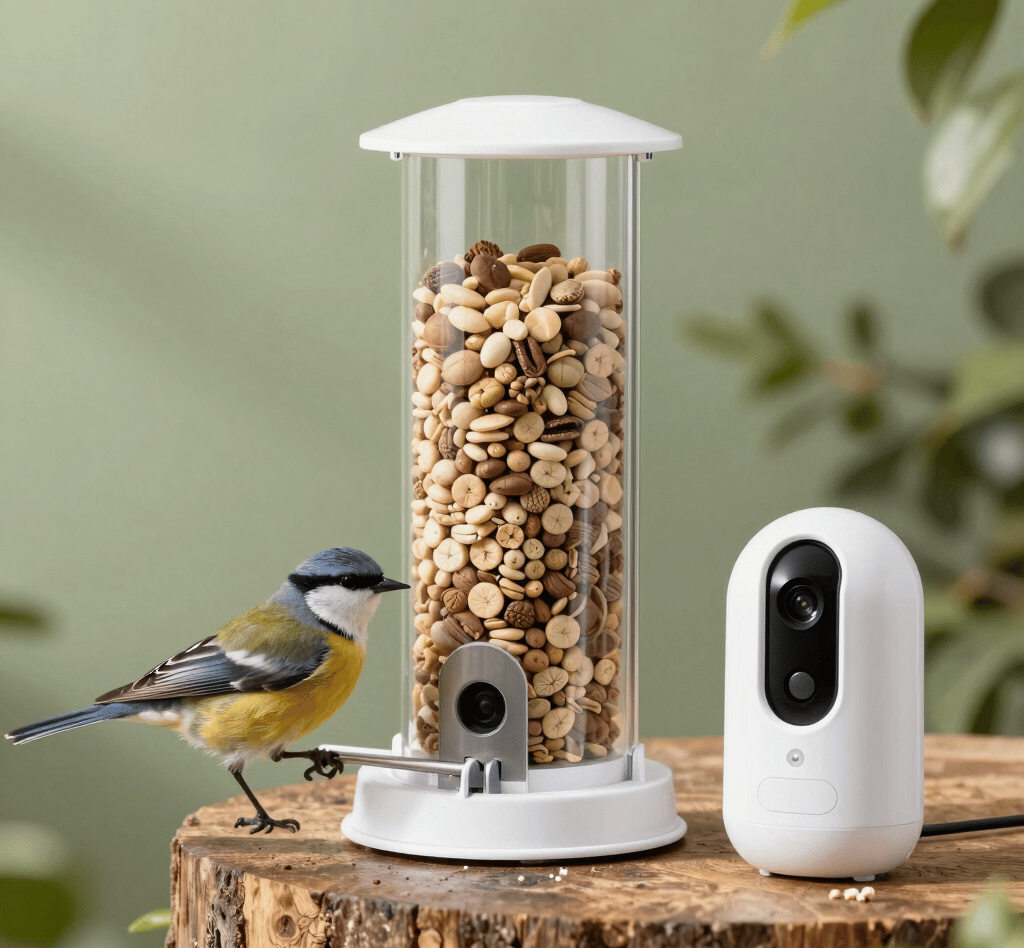
AI Bird Feeders With Cameras: Do They Actually Work? (Honest 2026 Guide)
The honest version: most people who buy an AI bird feeder don't go back to a regular one. The honest caveat: a lot of people also buy one expecting magic and feel let down by the first week.
AI bird feeders with cameras
are genuinely impressive pieces of hardware. They identify bird species by photograph, stream live footage to your phone, alert you the moment a cardinal lands, and log every visit with a timestamp. They also require proper placement, a stable Wi-Fi signal, and a few weeks of learning time before they perform at their best.
This guide covers what these feeders actually do in practice, where the technology is strong and where it still has limits, and how to decide whether the $150–$250 investment makes sense for how you watch birds.
The Core Technology: What "AI" Actually Means on a Bird Feeder
When a bird feeder brand uses the word "AI," they're specifically referring to image classification — a machine learning model trained on tens of thousands of labeled bird photographs that can match a new image against its training library to produce a species identification.
Bird Categories
Songbirds-(ex.) American Robin, Song Sparrow, House Finch
Woodpeckers-(ex.) Downy, Hairy, Red-bellied Woodpecker
Finches-(ex.) American Goldfinch, Purple Finch, House Sparrow
Cardinals-(ex.)Northern Cardinal, Pyrrhuloxia
Blue Jays & Corvids-(ex.) Blue Jay, American Crow
Hummingbirds-(ex.) Ruby-throated, Anna’s, Rufous
Chickadees-(ex.)Black-capped, Carolina Chickadee
The practical pipeline looks like this:
A bird lands at the feeder
The camera detects motion and captures a frame or short clip
The image is processed either on-device (faster, works offline) or uploaded to a cloud server (slower, more accurate on complex species)
The AI model returns a species match with a confidence score
Your phone receives a push notification: "Northern Cardinal — 7:42 AM"
The best systems, like those running on the Birdfy platform, have been trained on databases covering 10,000+ species globally. That breadth matters more than it sounds — even in North America, regional variants and seasonal plumage changes can trip up less comprehensive models.
What AI bird feeder cameras currently do well:
Common backyard species in good daylight: 85–95% accuracy
Distinguishing similar species (House Finch vs. Purple Finch): 70–80% depending on angle
Juvenile or molting birds: 50–65% — legitimately hard even for experienced birders
Nighttime identification: limited unless the model uses color night vision
Understanding these ranges sets realistic expectations. Treat AI identification as a strong first suggestion, not a field guide verdict.
Features That Genuinely Change How You Feed Birds
Real-Time Species Alerts
This is the feature that converts casual feeder owners into active birdwatchers. Getting a notification that says "Pileated Woodpecker — first visit this season" while you're at your desk creates a moment of engagement that a traditional feeder simply can't provide.
Alerts are customizable on most platforms — you can filter by species, set quiet hours, or opt for a daily summary digest instead of per-visit pings. For households where the feeder is visible from a window, the notification acts as a nudge to look up at the right moment.
Live Video Streaming
Every current AI bird feeder with a camera supports live streaming through its companion app. Stream quality varies — most deliver clear 1080p footage in daylight, though compression artifacts appear on some platforms when network bandwidth is limited.
More useful than live streaming for most users is clip storage: the system automatically saves a short video clip for each detected bird visit, building a browsable library organized by species and date. Reviewing a week's visits takes minutes and reveals patterns — which species arrive at dawn, which compete for perch position, which never overlap.
Automated Seed Monitoring
Seed-level sensors (typically ultrasonic or weight-based) send low-seed notifications before the feeder empties completely. This single feature has a measurable impact on bird visitation consistency — birds that find an empty feeder three times in a row relocate to other food sources and may not return for weeks.
Pairing low-seed alerts with a subscription seed delivery service (available through several smart feeder platforms) creates a largely hands-off maintenance loop.
Pest Detection and Logging
AI classification distinguishes birds from squirrels, chipmunks, and raccoons. When a non-bird visitor is detected, the app logs it separately and can trigger an alert distinct from bird notifications. Some feeders integrate with motorized deterrents — spinning perches, weight-sensitive shutoffs, or brief deterrent tones.
No AI feeder eliminates squirrels entirely without physical hardware support (a proper baffle on a smooth pole mount, away from all jumping surfaces). But accurate detection at least makes the squirrel problem visible and trackable rather than a mystery drain on your seed budget.
Night Vision and Audio: The Features That Separate Good from Great
Entry-level smart feeders stop at daytime camera functionality. Premium models add two features that significantly expand the feeder's usefulness:
Color night vision — Unlike standard infrared night vision (which produces black-and-white footage), color night vision sensors capture recognizable detail after dark without emitting a visible flash that disturbs shy nocturnal visitors. Owls, nighthawks, flying squirrels, and deer visiting the feeder area at night are clearly visible rather than ghostly silhouettes.
Microphone and audio recording — This is underrated. Many bird species are more reliably identified by their call than by their appearance, especially in poor lighting or at an angle where plumage detail isn't visible. Feeders with clean audio capture are meaningfully more useful for species identification than camera-only models. The Bird Buddy Smart Feeder is currently the standout in this category.
AI Smart Bird Feeder Comparison: Top Models Available in 2026
Smart Feeder Comparison
Birdfy Smart Feeder-$199–$229; 1080p HD; 10,000+ species; best for all-round performance
Netvue Birdfy Cam-$99–$129; 1080p HD; 10,000+ species; best for budget entry point
Bird Buddy Smart Feeder-$199–$249; 5MP + wide lens; audio recording; best for photo quality
Wasserstein Bird Feeder Cam-$149–$179; 1080p HD; 10,000+ species; best for mid-range buyers
Prices reflect approximate retail as of May 2026.
What to Know Before You Buy
Placement determines 80% of your results. The camera needs a clean sightline to the perch with the light source (ideally the sun) behind the camera, not behind the birds. A backlit bird produces a silhouette, not a usable identification image. Spend 10 minutes at the intended location at different times of day before drilling any mounting hardware.
2.4GHz Wi-Fi is non-negotiable. Every current AI bird feeder operates on the 2.4GHz Wi-Fi band only. If your router broadcasts a combined 2.4/5GHz network under a single SSID, you may need to split the bands during setup. This is the most common reason smart feeder apps fail to connect — and it has nothing to do with the feeder hardware.
Expect a 2–4 week calibration period. AI identification accuracy improves as the system accumulates images from your specific feeder location, lighting conditions, and regional species mix. The first week may feel underwhelming; month two is typically when the system starts feeling genuinely impressive.
Match seed to your target species. The smartest feeder in the world won't attract birds if it's stocked with the wrong seed blend. Black oil sunflower seed attracts the broadest range of backyard species. Nyjer (thistle) draws finches specifically. Suet cakes are the most reliable way to attract woodpeckers. Platform feeders with mixed blends attract ground-feeding species like juncos and white-throated sparrows that tube feeders miss entirely.
Who Gets Real Value From an AI Bird Feeder
Strong fit:
Active birdwatchers who engage with what visits their yard regularly
Families with children interested in nature identification and wildlife observation
Wildlife photographers wanting a camera-triggered capture system without disturbing subjects
Frequent travelers who want feeder oversight and remote monitoring while away
Citizen science contributors to eBird, iNaturalist, or Cornell's Project FeederWatch
Weaker fit:
Infrequent feeder users who don't actively engage with bird observation
Properties with very poor Wi-Fi coverage outdoors (signal extenders can help, but add cost)
Buyers in areas with limited backyard species diversity — the AI's value scales with variety
Frequently Asked Questions
What is an AI bird feeder? An AI bird feeder is a smart feeding station that uses a built-in camera and machine learning software to automatically identify visiting bird species, send real-time smartphone alerts, stream live video, and log feeding activity by species and time. Most models also include seed-level monitoring and pest detection.
How accurate is AI bird species identification? For common backyard species under good daylight conditions, the best current models achieve 85–95% accuracy. Accuracy is lower for juvenile birds, molting plumage, unusual camera angles, and uncommon species. AI identification is a reliable starting point but should be verified before submitting to citizen science platforms.
Do AI bird feeders need Wi-Fi? Yes. All current AI bird feeders require a 2.4GHz Wi-Fi connection for real-time alerts, live streaming, and cloud storage. Some models save a limited number of images locally during temporary outages, but the core smart features depend on active connectivity.
Are AI bird feeders worth $200? For anyone who actively birdwatches, travels frequently, has children interested in wildlife, or contributes to citizen science programs, yes — the combination of species identification, visit logging, live streaming, and feeding automation delivers genuine value. For occasional, low-engagement feeder users, a traditional feeder with quality seed is sufficient.
Which AI bird feeder has the best species recognition? Birdfy (including the Netvue Birdfy models) currently offers the most comprehensive species database at 10,000+ species, making it the strongest choice for North American users wanting broad coverage. Bird Buddy has a smaller database but adds audio recording, which improves identification accuracy for species that are more recognizable by call than by appearance.
Can smart bird feeders deter squirrels? Smart feeders detect and log squirrel visits and can alert you in real time, but deterrence requires physical hardware — specifically a smooth pole mount with a dome or cylinder baffle, positioned at least 10 feet horizontally from any fence, tree, or structure a squirrel could leap from. AI detection makes the problem visible; physical installation controls it.
Final Thoughts
AI bird feeders with cameras work — and for the right buyer, they transform a passive seed station into an active wildlife observation platform. The species identification technology has matured to the point of genuine daily usefulness, the camera systems are weatherproof and capable of real photographic quality, and features like seed-level alerts and pest detection solve practical problems that frustrated traditional feeder users for years.
The investment makes the most sense when you're already engaged with birdwatching and want more from the birds already visiting your yard. If that describes you, these feeders consistently exceed expectations after the initial setup learning curve.
→ Read our hands-on Smart Bird Monitor Review → → Explore the full Bird Tech guide → → Micro Climate Controller for advanced habitat monitoring →
Affiliate disclosure: Pet Ecosystems participates in affiliate marketing programs. We may earn commissions from qualifying purchases made through links on this site at no additional cost to you. Our recommendations are based on independent research and editorial review.
Affiliate Disclosure:
Pet Ecosystems participates in affiliate marketing programs, which means we may earn commissions from qualifying purchases made through links on this website at no additional cost to you.
Our recommendations are based on independent research, product reviews, and editorial opinions intended to help pet owners discover quality products and smart solutions for their pets.
© 2026 Pet Ecosystems. All rights reserved.
Contacts
info@petecosystems.com