Best Reef Tank Lights 2026 Guide
Discover the best reef tank lights of 2026 with our comprehensive guide. Explore key features like PAR output, spectrum control, and smart technology for nano, LPS, and SPS reef aquariums. Make informed choices for vibrant and healthy aquatic environments.
AQUATIC
JaMarcus Smith Pet Ecosystems Team
5/16/20268 min read
Best Smart Reef Tank Lights for Coral Growth in 2026: A Complete Guide
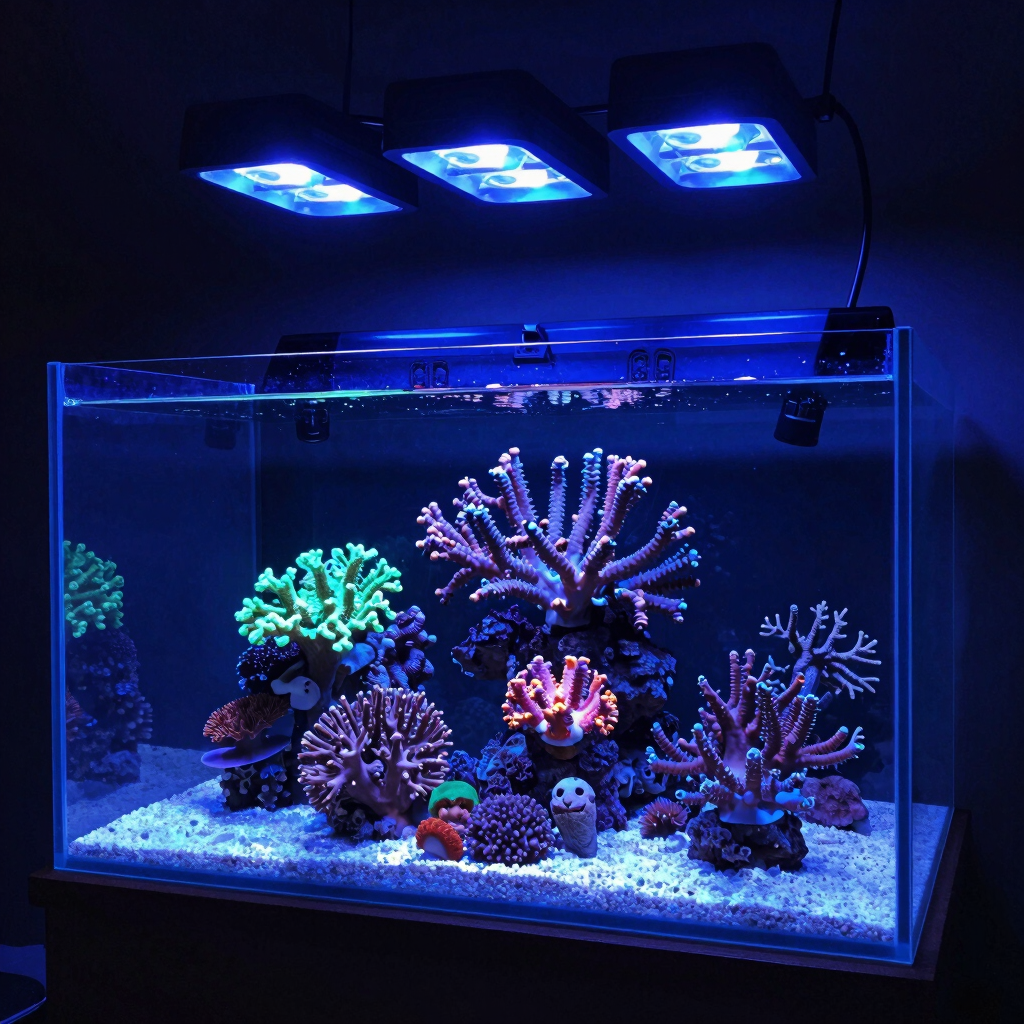
Lighting is the single most consequential decision in reef keeping. Get it right and your corals grow fast, color up vividly, and stay healthy for years. Get it wrong — wrong spectrum, wrong intensity, wrong coverage — and the same corals bleach, brown out, or slowly decline no matter how good your water chemistry is.
The good news: reef lighting technology has improved dramatically. Modern smart LED systems deliver the full spectrum corals need, at precise programmable intensities, controlled entirely from your phone. The challenge is navigating a market filled with options ranging from genuinely excellent to overpriced underperformers.
This guide covers what actually matters when choosing reef lighting, how to match a system to your specific tank and coral type, and which features separate the best smart reef lights from the rest.
Already researching a specific system? Read our full Smart WiFi Reef Lighting & Wavemaker Review → for a hands-on breakdown.
Why Reef Tank Lighting Is Different From Freshwater or FOWLR
Reef lighting is not about brightness. It is about delivering the right type of light at the right intensity for the biology happening inside your corals.
Most reef corals — especially LPS and SPS species — get the majority of their nutrition not from feeding but from photosynthesis performed by symbiotic algae called zooxanthellae living inside their tissue. These algae convert specific wavelengths of light into energy that feeds the coral host.
When the light spectrum is wrong, zooxanthellae cannot photosynthesize efficiently. The coral expels them — this is coral bleaching — and without that energy source, the coral slowly starves regardless of target parameters in the water column.
This is why reef lighting requires precision that freshwater planted tanks and fish-only systems do not. Intensity matters. Spectrum matters. Photoperiod consistency matters. And all three need to be dialed in for the specific coral types you are keeping.
The Four Things That Actually Determine Reef Lighting Performance
1. PAR Output and Distribution
PAR (Photosynthetically Active Radiation) is the standard measurement of light usable for photosynthesis, measured in micromoles per square meter per second (µmol/m²/s). It is the most important single spec when evaluating a reef light.
Different coral types require very different PAR levels:
Coral TypeRecommended PAR RangeSoft corals (mushrooms, zoanthids, leathers)50–150 µmol/m²/sLPS corals (Hammer, Torch, Frogspawn, Brain)75–200 µmol/m²/sMixed reef (LPS + some SPS)150–300 µmol/m²/sSPS dominant (Acropora, Montipora, Stylophora)250–400+ µmol/m²/s
PAR output is only half the story — distribution matters equally. A light that hits 400 µmol/m²/s dead center but drops to 50 at the edges leaves a significant portion of your tank under-lit. Always check PAR maps, not just peak figures.
2. Spectrum and Channel Control
Reef corals respond most strongly to the blue end of the spectrum — particularly wavelengths in the 420–480nm range. This range drives both photosynthesis and the fluorescent pigmentation that makes reef tanks visually stunning under actinics.
White and full-spectrum channels fill in the remaining photosynthetic range and make the tank look natural in photographs and to the human eye. UV channels at 365–400nm enhance coral fluorescence further.
The best smart reef lights offer independent channel control — the ability to adjust blue, white, UV, and sometimes red and green channels separately. This lets you tune the spectrum precisely for your coral mix and dial in the visual appearance you want independently of the biological requirements.
3. Smart Controls and Programmability
Modern reef lighting lives and dies by its app and programming capabilities. The features that matter:
Automated day/night cycles. Consistency in photoperiod — the same light intensity pattern every day — is critical for coral health and behavior. Manual adjustments create unpredictable variation; automated scheduling eliminates it entirely.
Sunrise and sunset simulation. Gradual ramp-up and ramp-down at the start and end of the photoperiod reduces stress on fish and corals, mimics natural light patterns, and minimizes aggressive territorial behavior that often spikes when lights switch on suddenly.
Weather and cloud effects. Random light variation throughout the day — brief dimming simulating cloud cover, occasional intensity spikes simulating sun emergence — keeps corals in a more dynamic, natural light environment. Several studies suggest varied light exposure produces better growth outcomes in SPS corals than completely static intensity.
Acclimation mode. New corals, or an existing tank switching to new lighting, should never receive full intensity immediately. Quality smart reef lights include gradual acclimation schedules that increase intensity over several weeks, preventing light shock and bleaching events.
Remote access. Adjust your light schedule from anywhere, check intensity levels while traveling, and respond immediately if a coral shows stress signals — all without being physically present.
4. Thermal Management and Build Quality
Heat is the enemy of stable reef temperatures. Early reef lights — metal halides in particular — generated enormous heat that required active chilling to offset. Modern LED systems run dramatically cooler, but build quality still determines how much residual heat reaches the water surface.
Premium reef lights use aluminum heat sinks, active cooling fans, and thermal throttling to prevent heat buildup. Cheaper units run hot, which shortens LED lifespan, increases ambient tank temperature, and forces your chiller or fans to work harder.
A quality LED reef light should run comfortably warm to the touch — not hot. If it burns your hand after an hour of operation, thermal management is inadequate.
Matching the Light to Your Tank Type
Nano Reef Tanks (Under 30 Gallons)
Nano reefs need compact, efficient lighting that delivers adequate PAR without overwhelming a small water volume. Overpowered lighting on a small tank creates hot spots, accelerates evaporation, and makes spectrum management difficult.
What to look for: Compact footprint, adjustable intensity down to 10–20% for soft coral zones, good coverage-to-size ratio, quiet or passive cooling (fan noise matters in small spaces).
Best coral match: Soft corals, zoanthids, mushrooms, and hardy LPS like Hammer and Torch corals are ideal for nano reefs. SPS is achievable in nano setups but requires very precise PAR management.
Mixed Reef Tanks (30–100 Gallons)
Mixed reefs — the most popular reef configuration — combine soft corals, LPS, and entry-level SPS in a single tank, typically using a light gradient to give each coral type its preferred intensity zone (SPS at the top, soft corals and LPS mid-to-low).
What to look for: Wide, even PAR distribution, full independent channel control, strong blue output, reliable scheduling app. This is where mid-to-premium fixtures earn their price — even coverage across the full footprint is essential.
SPS-Dominant Tanks (Any Size)
SPS reefs are the most demanding configuration in the hobby. Acropora, Montipora, and Stylophora require stable, high-intensity light delivered consistently day after day. Any variation — intensity fluctuation, spectrum drift, inconsistent photoperiod — shows up as bleaching, browning, or halted growth within weeks.
What to look for: Maximum PAR output with even distribution, highest-quality build with proven thermal management, advanced spectrum tuning for both growth and coloration, and a highly reliable programming platform with no connectivity issues.
This is the segment where premium lighting pays for itself most clearly. A SPS tank running $500–$800 in coral frags is far more expensive to replace than the difference between a budget and premium light fixture.
Smart Features Worth Paying Extra For
Not every smart feature on a reef light spec sheet delivers real value. These do:
Independent multichannel control — being able to tune blue, white, UV, and violet separately is not a luxury for serious reefers; it is a fundamental requirement for proper coral husbandry.
PAR-calibrated intensity scheduling — some advanced lights allow you to program intensity targets in PAR values rather than raw percentage, removing the guesswork from dialing in your photoperiod.
Integration with reef controllers — lights that communicate with Neptune Apex, GHL ProfiLux, or similar reef management systems allow your entire tank's environment to respond to each other. A temperature spike can automatically dim lighting; a power interruption can trigger a safe recovery sequence.
OTA firmware updates — reef lighting technology continues to evolve. Lights that receive over-the-air firmware updates improve over time rather than becoming obsolete. Check whether the manufacturer has a track record of updating their platform.
Common Reef Lighting Mistakes That Stall Coral Growth
Running lights too long. A 12-hour photoperiod seems intuitive but is too long for most reef tanks — it accelerates algae growth more than coral growth. Most experienced reefers run 8–10 hour photoperiods with a gradual ramp.
Skipping acclimation. Moving corals from lower-light conditions to a high-PAR reef light without a proper acclimation period is one of the most common causes of bleaching in new reef setups. Always ramp up over 2–4 weeks.
Mounting too high or too low. Mounting height directly affects PAR at the substrate. Too high and PAR drops below the threshold for SPS growth; too low and you create uneven hot spots and risk light shock. Check PAR maps for your specific fixture and tank depth before finalizing placement.
Ignoring edge coverage. Many reefers position their best corals in the center of the tank, directly under peak PAR, while the edges run significantly lower. This limits where you can place corals and creates visual dead zones. Fixtures with wider beam angles or supplemental side lighting solve this.
Chasing aesthetics over biology. A heavily blue-shifted photoperiod looks spectacular in photos but may not provide adequate white-spectrum light for optimal photosynthesis. The best reef lighting balances visual presentation with the spectral requirements of your specific coral mix.
Frequently Asked Questions
What is the most important spec to check when buying reef lights? PAR output and distribution. Peak PAR tells you the maximum intensity; a PAR map tells you whether that intensity is delivered evenly across your tank footprint. Both numbers matter — a light with high peak PAR but poor distribution creates uneven growth and frustrating placement constraints.
How many hours should reef lights run per day? Most reef tanks perform best with an 8–10 hour photoperiod, including a 30–60 minute ramp up and ramp down at each end. Soft coral tanks can tolerate up to 10–12 hours; SPS-dominant tanks often do best at 8–9 hours with higher intensity during the peak window.
Can reef lights be too bright for corals? Yes. Excessive PAR causes photoinhibition and bleaching, particularly in LPS and soft corals placed at the top of the water column. The solution is either reducing intensity, increasing mounting height, or placing high-light-demand corals near the surface and lower-demand species at the bottom of the tank.
Do I need a separate UV light for reef tanks? Most modern reef LED fixtures include UV channels as part of their integrated spectrum. A separate UV fixture is generally not necessary unless you are specifically targeting maximum coral fluorescence in a display-focused build.
How long do reef LED lights last? Quality reef LED fixtures typically last 50,000–80,000 hours of rated LED life — effectively 10+ years of normal use. Diode degradation is gradual; most reefers notice measurable PAR reduction after 5–7 years and replace at that point.
Are smart reef lights worth the price premium over basic LEDs? For tanks housing LPS or SPS corals, yes. The ability to program consistent photoperiods, run acclimation schedules, and fine-tune spectrum channels independently produces measurably better coral outcomes than fixed-intensity basic LEDs. For soft coral-only tanks, a quality basic LED is often sufficient.
Final Thoughts
Reef lighting is one area of the hobby where the gap between good and great equipment produces visible, measurable results in your corals. The right smart reef light does not just illuminate your tank — it drives coral growth, enhances coloration, and gives you the control to manage your reef's light environment with the same precision you apply to water chemistry.
The investment threshold for quality reef lighting has dropped significantly. Systems that would have cost $600–$800 five years ago now compete with newer options at $300–$400 that deliver comparable PAR and better software. The key is matching the fixture to your tank size, coral type, and the level of control you actually want to use.
Buy for the reef you are building toward, not just the one you have today.
Related: Automated Water Lab Review · Aquatics Tech Guide
Affiliate disclosure: Pet Ecosystems participates in affiliate marketing programs. We may earn commissions from qualifying purchases at no additional cost to you. Our recommendations are based on independent research and product testing.
Affiliate Disclosure:
Pet Ecosystems participates in affiliate marketing programs, which means we may earn commissions from qualifying purchases made through links on this website at no additional cost to you.
Our recommendations are based on independent research, product reviews, and editorial opinions intended to help pet owners discover quality products and smart solutions for their pets.
© 2026 Pet Ecosystems. All rights reserved.
Contacts
info@petecosystems.com