
LTE-M vs Bluetooth Pet Tracker: Which Is Better for Your Dog?
LTE-M GPS vs Bluetooth pet tracker — we compare range, battery life, real-time tracking & cost to help you choose the right collar for your dog or cat.
DOG
Eli Flores Pet Ecosystem Team
5/17/20268 min read
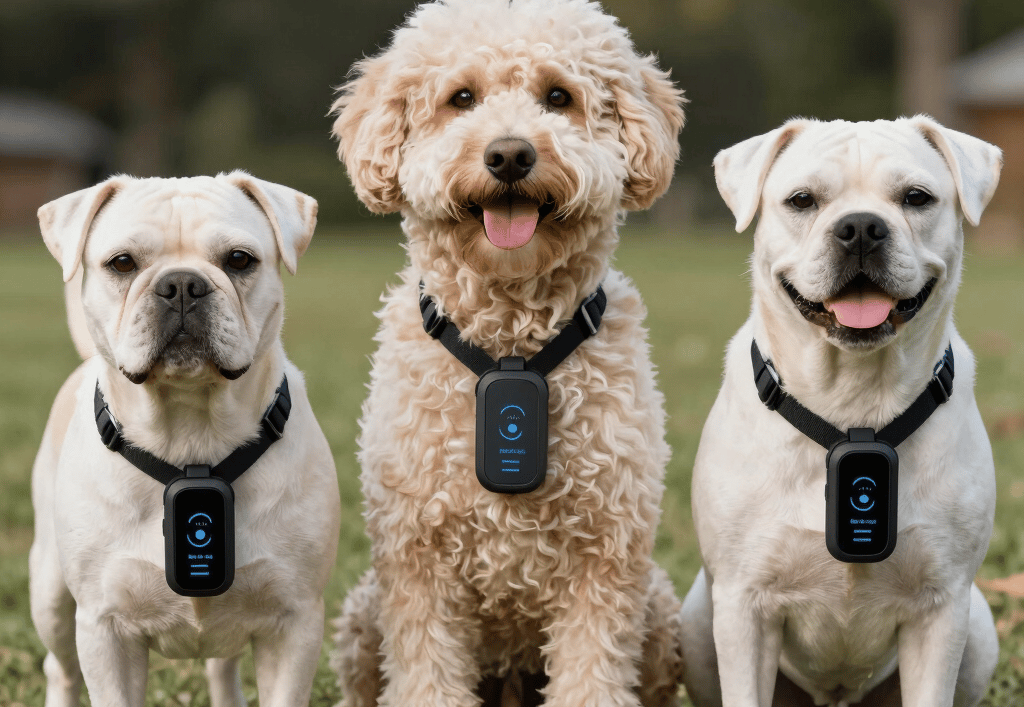
LTE-M vs Bluetooth Pet Tracker: Which Technology Actually Keeps Your Pet Safe?
When your dog slips through a gate or your cat disappears for longer than usual, one question overrides everything else: where are they right now?
A microchip answers that question only after someone catches your pet and takes them to a scanner. That is passive identification, not active tracking — and for owners who want to know their pet's location in real time, it is not enough.
Modern pet trackers fall into two distinct technology categories: Bluetooth trackers and LTE-M GPS collars. Both clip onto your pet. Both connect to your phone. They work in fundamentally different ways, with very different real-world performance profiles — and choosing the wrong one for your pet's lifestyle could leave you with a tracker that looks useful on paper but fails exactly when you need it most.
This guide breaks down how each technology works, where each wins and loses, and how to match the right tracker to your specific pet and situation.
How Bluetooth Pet Trackers Work
Bluetooth trackers — including Apple AirTags, Tile, and similar devices — work by broadcasting a low-energy Bluetooth signal from the tag attached to your pet's collar.
When another Bluetooth-enabled device (a smartphone, tablet, or laptop) comes within range of that signal, it silently detects the tag and reports its approximate location to the manufacturer's network. You see an updated location on your phone.
The critical word is within range. Standard Bluetooth operates effectively at 30–100 feet under ideal conditions. In a dense urban environment with many phones nearby, the crowdsourced detection network can piece together a location trail as your pet moves through areas where other users' phones pick up the signal. In a suburban backyard, a quiet park, or a rural area, that network thins out dramatically — and so does the tracker's usefulness.
Bluetooth trackers are not real-time GPS devices. They are proximity detectors that rely on other people's smartphones being nearby to function. That distinction matters enormously when your dog has been missing for 20 minutes and is a mile away.
How LTE-M GPS Pet Trackers Work
LTE-M stands for Long-Term Evolution for Machines — a low-power cellular network protocol specifically designed for IoT devices like smart collars, medical monitors, and industrial sensors.
An LTE-M GPS collar does two things simultaneously:
GPS satellite positioning — the collar triangulates its precise location using satellite signals, accurate to within a few meters
LTE-M cellular transmission — that location data is sent directly to your phone via cellular network, with no dependence on other users' devices being nearby
The result is genuine real-time tracking. You open the app, and you see where your pet is — right now, not where they were when someone's phone happened to pass by.
LTE-M networks are designed for low-power, always-on connectivity. They consume significantly less battery than standard LTE or 4G, which is why GPS collars using this protocol can run for 24–72+ hours between charges depending on tracking frequency settings.
Full Side-by-Side Comparison
Bluetooth Pet Tracker Pros
✅ Lower upfront cost ($25–$50)
✅ No monthly subscription in most cases
✅ Extremely lightweight (typically 5–10g)
✅ Battery life often lasts for months
✅ Works indoors reasonably well
✅ Can still function at short range without cellular service
Bluetooth Pet Tracker Cons
❌ Limited tracking range (typically 30–100 feet)
❌ No true real-time location tracking
❌ Relies on nearby devices for crowdsourced location updates
❌ Very poor performance in rural areas
❌ No built-in GPS for precise location data
❌ Escape alerts are unreliable
❌ Limited or no activity monitoring features
LTE-M GPS Collar Pros
✅ Nationwide cellular coverage
✅ True real-time GPS tracking
✅ Accurate location data, often within a few meters
✅ Strong performance in rural areas with cellular coverage
✅ Instant geofence and escape alerts
✅ Comprehensive activity and fitness tracking
✅ Ideal for escape-prone or adventurous pets
LTE-M GPS Collar Cons
❌ Higher upfront cost ($100–$200)
❌ Monthly subscription typically required ($5–$15/month)
❌ Shorter battery life (usually 24–72+ hours)
❌ Heavier than Bluetooth trackers (typically 30–50g)
❌ GPS accuracy can decrease indoors
❌ Live tracking stops when cellular service is unavailableWhere Bluetooth Trackers Actually Work Well
Bluetooth trackers are not useless — they are simply misapplied when marketed as outdoor pet safety devices.
Finding a pet inside your home. If your cat has hidden under a bed, inside a closet, or behind appliances, a Bluetooth tracker's short-range signal is precise enough to lead you directly to them. For indoor cats that hide during storms or home disruptions, this is genuinely useful.
Dense urban environments. In a city with high smartphone density — apartment buildings, busy streets, crowded parks — the crowdsourced detection network is thick enough that a lost pet moving through the area may generate reasonably frequent location pings. It is not real-time, but it can provide a useful trail.
Low-budget supplemental tracking. For a small dog that never leaves a fenced yard, a Bluetooth tracker attached to the collar provides a cheap backup layer. If the dog somehow gets out, nearby neighbors' phones may detect and report the signal.
The honest ceiling: Bluetooth trackers are proximity tools, not tracking tools. For any situation where your pet is more than 100 feet away in a non-urban environment, they provide very little actionable information.
Where LTE-M GPS Trackers Are in a Different Category
Active and Outdoor Dogs
For dogs that hike, run off-leash, spend time on farms, or go to dog parks, LTE-M tracking is the only technology that provides meaningful safety coverage. A dog that is 500 meters away in a wooded park is completely invisible to Bluetooth. An LTE-M collar shows you exactly where they are on a satellite map, updated every few seconds.
Real-Time Escape Response
The moment a dog exits a defined geofence, an LTE-M collar sends an instant push notification to your phone. You know within seconds — not minutes or hours — that your dog has left the yard. That response time difference is frequently the difference between a recovered dog and a lost one.
Dogs that escape tend to move fast. A dog that slips through a gate can cover a quarter mile in three minutes. With Bluetooth, you may not know they are gone until you physically go outside. With LTE-M, you are already looking at their live location before they have reached the end of the block.
Rural Properties and Travel
In rural areas, fields, and low-density neighborhoods, Bluetooth crowdsourcing coverage is effectively zero. There are no nearby phones to detect and relay the signal. LTE-M connects directly to cellular towers, which cover the vast majority of populated land in the U.S. and most developed countries — making it the only reliable option for rural pet owners.
The portability advantage also applies to travel. An LTE-M collar works wherever there is cellular coverage. Take your dog to a national park, a campground, or a vacation rental — the tracker works the same way.
Multi-Technology Smart Collars
The leading LTE-M GPS collars now combine multiple positioning technologies:
GPS satellite for outdoor accuracy
LTE-M cellular for data transmission and rural coverage
Wi-Fi positioning for improved indoor location
Bluetooth for short-range precision near home
This hybrid approach solves the traditional GPS weakness indoors — where satellite signals struggle to penetrate — by falling back to Wi-Fi triangulation when the collar detects a known network. The result is reliable location awareness across every environment your pet moves through.
Battery Life: The Real Trade-Off
Battery life is the most legitimate practical advantage Bluetooth trackers hold over LTE-M GPS collars, and it is worth understanding why the gap exists.
A Bluetooth tracker does almost nothing between pings. It broadcasts a low-energy signal passively and consumes near-zero power. A quality Bluetooth tracker battery lasts 6–12 months before needing replacement.
An LTE-M GPS collar is doing active work: polling GPS satellites, maintaining a cellular connection, running an accelerometer for activity tracking, and transmitting data to the cloud continuously. This requires real power. Most LTE-M collars deliver 24–72 hours of battery life between charges on standard tracking settings. High-frequency tracking modes (updating every few seconds) reduce this further.
For most dog owners, charging a collar every 2–3 days becomes a simple routine. For owners who are away from home for extended periods or manage working dogs on large properties, the charging cadence is worth factoring into the buying decision. Some collars allow battery-saving modes — reducing GPS update frequency — that can extend battery life to 5–7 days.
Choosing the Right Tracker for Your Pet
Choose a Bluetooth tracker if:
Your pet is primarily indoors or stays close to home
Budget is the primary constraint
You want a lightweight tag with no subscription cost
You live in a dense urban area where crowdsourcing is effective
You want a backup tracker to complement an existing GPS collar
Choose an LTE-M GPS collar if:
Your dog spends time outdoors, off-leash, or on large properties
You want true real-time location tracking
You travel with your pet regularly
You live in a suburban or rural area
Instant escape alerts are important to you
You want activity monitoring alongside location tracking
Use both if:
You have a dog that roams and want layered coverage
You want real-time GPS tracking plus an ultra-light backup for short-range finding at home
Frequently Asked Questions
Can a Bluetooth tracker find my dog if they run away? Only if another smartphone user with the same tracker app passes within Bluetooth range of your dog. In urban areas this may happen relatively quickly; in suburban or rural areas it may not happen at all, or not until hours have passed. For active or outdoor dogs, Bluetooth alone is not a reliable lost-pet recovery tool.
Does LTE-M work in remote or rural areas? LTE-M works wherever cellular coverage exists. In areas with no cell service — deep wilderness, remote mountains — neither LTE-M nor any cellular technology will transmit location data. For true backcountry tracking, satellite-based trackers (using Garmin's network, for example) are the appropriate technology.
How accurate is LTE-M GPS tracking? Most LTE-M GPS collars provide location accuracy within 3–9 meters under open sky. In urban areas with tall buildings or dense tree cover, accuracy may vary to 10–20 meters. This is sufficient to identify which building, yard, or street your pet is in.
Are GPS dog collars safe to wear all the time? Yes — quality GPS collars are designed for continuous wear. They are waterproof, durable, and sized to fit comfortably alongside a standard collar or as a standalone unit. Most manufacturers recommend removing the collar for charging every 2–3 days.
Is a monthly subscription worth it for a GPS pet tracker? For pets that spend any significant time outdoors or unsupervised, yes. The subscription cost ($5–$15/month) provides the cellular connectivity that makes real-time tracking possible. Without the subscription, most LTE-M collars revert to basic Bluetooth-only functionality.
What is the best GPS collar for dogs? The Fi Series 3 is one of the highest-rated LTE-M GPS collars available, combining strong cellular coverage, activity tracking, and a well-designed companion app. Read our full Fi Series 3 GPS Smart Collar Review → for a complete breakdown.
Final Thoughts
Bluetooth and LTE-M GPS trackers are not competing versions of the same product. They solve different problems at different price points for different types of pets.
Bluetooth trackers are affordable, lightweight, and effective at close range — making them a reasonable choice for indoor pets or as a low-cost backup layer. They are not a substitute for real-time GPS tracking when a dog is actively lost outdoors.
LTE-M GPS collars provide what most dog owners actually need: the ability to see exactly where their pet is, right now, regardless of how far they have wandered. The subscription cost and daily charging routine are the trade-offs — both manageable, and both worth it for any owner whose dog spends meaningful time outside.
If your dog ever goes off-leash, lives near a road, or has shown any history of escape behavior, an LTE-M GPS collar is not a luxury. It is the most effective safety tool available for your pet outside of a physical enclosure.
Related: GPS Dog Fence vs Traditional Fence · Halo 3 Wireless Fence Review · Dog Tech Guide
Affiliate Disclosure:
Pet Ecosystems participates in affiliate marketing programs, which means we may earn commissions from qualifying purchases made through links on this website at no additional cost to you.
Our recommendations are based on independent research, product reviews, and editorial opinions intended to help pet owners discover quality products and smart solutions for their pets.
© 2026 Pet Ecosystems. All rights reserved.
Contacts
info@petecosystems.com